Google's 2025 Year-End Algorithm Recap: Generic Affiliates Exit, Vertical Brands Take Over 'Best of' Traffic
Hi everyone, this is Neo.
Today is January 9, 2026 — the start of a new year.
Looking back at the December that just passed, Google played it “dirty”: quietly dropping a bombshell — the December 2025 Core Update.
The update ran from December 11 all the way to December 29, landing right on top of everyone’s Christmas and New Year hustle. Now that a lot of niche site folks are back from the holidays, they’re checking their data and discovering the world has changed.
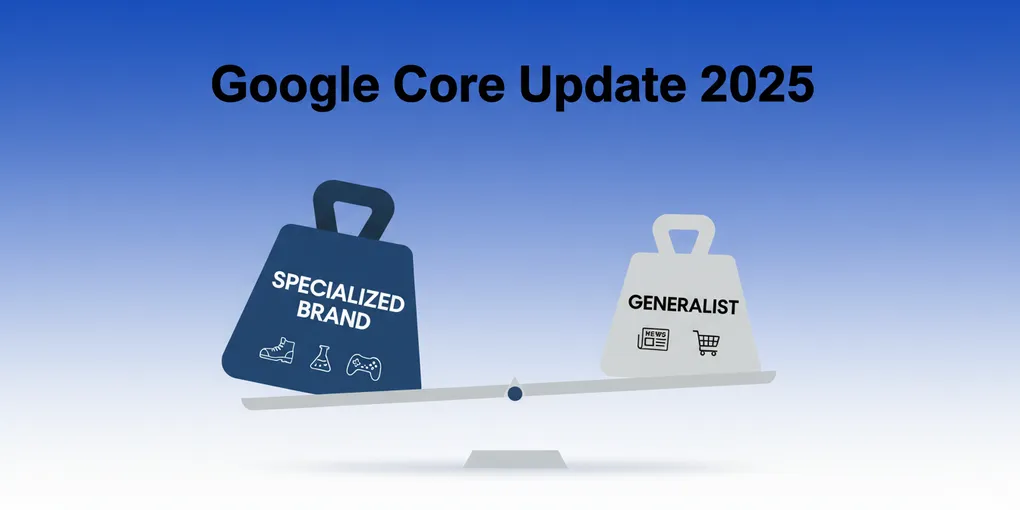
If I had to sum up this update’s core logic in one sentence: “jack-of-all-trades” generalist sites are exiting, while vertical “experts” and “brands” are taking over the traffic.
Especially for the high-value commercial queries we know best — “Best of…” — Google’s compass has completely turned.
Today, drawing on analysis from authoritative SEO experts abroad (like Aleyda Solís and Glenn Gabe), I’m going to deep-dive this update and look at what we should be doing with our niche sites in 2026.
1. The Great “Best of” Traffic Migration
In the old days, when users searched “Best Steam Deck Games,” the top results were usually comprehensive gaming media or review sites like Games Radar.
After this update, that’s changed.
What we saw:
- Losers: Generalist content media sites and broad affiliate websites.
- Winners: Brand official sites and vertical retailers with direct product authority.
Case in point: For queries like “Best Steam Deck Games” and “Upcoming Video Games,” veteran media outlet Games Radar’s rankings plummeted — replaced by official catalog pages from Nintendo and Epic Games.
Neo’s take:
Google seems to be redefining the search intent behind “Best of” queries. It used to treat them as “information seeking” (I want to read reviews); now Google leans toward treating them as “commercial purchase” (I want to buy the most authentic product).
For affiliate folks, this is a danger sign. If you’re just putting together shallow “grab-bag” reviews without deep vertical expertise, the brands themselves may take your lunch.
2. Life-or-Death Games in Vertical Niches
The blast radius was wide — covering e-commerce, SaaS software, news publishing, and more.
1. Ecommerce: Specialists Beat Generalists
Department-store giant Macy’s took a serious hit in this update.
- Searching “winter boots women” or “winter coats”? Macy’s rankings dropped.
- Who moved up? Outdoor-equipment brand sites like Columbia and The North Face, plus vertical stores like Fragrance Market that focus purely on perfume.
Takeaway: Google’s logic now is: if you sell everything, you’re probably an expert at nothing. In the mid-funnel product-selection stage, Google would rather hand users to the “specialist” in that category.
2. SaaS Software: The Victory of Vertical Tools
The same drama played out in B2B software.
- Big platforms like Zapier, Adobe, and even CNBC lost ground on searches like “Accounting Software for Small business.”
- Instead, vertical SaaS vendors dedicated to accounting software — Freshbooks and Xero — captured more traffic with precisely targeted landing pages.
Neo’s take:
B2B niche site owners, listen up: don’t try to turn your site into a “software supermarket.” In your lane, go deep — prove you’re the No. 1 in that niche — and that matters far more than padding out unrelated product lines.
3. News Publishing: The Iron Law of E-E-A-T
News sites were also a major casualty, especially generalist news outlets without authority in any specific domain.
Data shows a bunch of Indian news publishers (like Hindustan Times) saw their visibility in US search results crater. But it wasn’t just India — US-based generalist news sites swung wildly too.
This confirms again that Google’s Topic Authority system is playing a bigger role. If you’re publishing news just to chase trending topics without long-term accumulation in that field, Google will demote you without mercy.
3. Why Did Google Do This?
Looking past the surface, the underlying logic of this update is an extreme pursuit of E-E-A-T (Experience, Expertise, Authoritativeness, Trust).
- Cracking down on “grab-bags”: Generalist content is getting harder to trust. Google’s algorithm believes a perfume store is naturally more authoritative on “perfume” than Macy’s.
- Reconstructing commercial intent: Google realizes users searching “Best” are close to buying. At that moment, pointing users to a brand or specialist retailer may deliver a better experience than a third-party review site plastered with ads.
- Fighting AI junk content: 2025 was the year AI content flooded the web. Boosting the weight of “expertise” and “brands” is essentially Google’s way of filtering out the batch-generated, experience-free AI garbage.
4. How Should Niche Site Operators Break Through in 2026?
Facing this update, what should we Chinese cross-border niche site sellers do? Neo has three suggestions:
1. If You Can’t Be Broad, Be Deep
If you run a vertical niche site, congratulations — your spring has arrived.
- Action: Audit your site structure. Make sure all your content revolves around your core niche.
- Case: If you sell yoga wear, don’t chase “running shoes” traffic. Go deep on every long-tail keyword under “yoga” — fabric science, styling guides, the works.
2. Build “Brand Feel” and “Human Feel”
Google loves brands. Even if you’re a small DTC seller, package yourself like a “brand.”
- Action: Polish your About Us page — show a real team, a real founding story, real professional backgrounds.
- Key: Don’t credit articles to “Admin.” Use real people’s names, complete with their professional bios.
3. Claim the “Best of” Brand High Ground
Since Google is handing “Best of” queries to brands, we need to become the brand Google recognizes.
- Action: Add in-depth buying guides and comparison content to your product and category pages. Don’t hand that traffic to third-party blogs — own the “Best [Your Category]” terms yourself.
Summary
The December 2025 core update is Google’s “purification” of the internet’s content ecosystem.
Traffic no longer favors middlemen — it’s returning to product experts and brands.
For us niche site sellers who seriously build products and seriously create content, this is actually good news. As long as you’re expert enough and vertical enough, you don’t need to fear the giants monopolizing traffic.
Sources:
- December Core Update: More Brands Win “Best Of” Queries - Search Engine Journal
- Aleyda Solís & Glenn Gabe’s Analysis on LinkedIn
Neo’s interaction corner: Did your niche site traffic fluctuate in December? Up or down? Drop a comment below — let’s compare notes on how to respond.