Google Says Don't Create "AI-Exclusive" Content? The Truth and Chaos of SEO & GEO in 2026
Hi everyone, this is Neo.
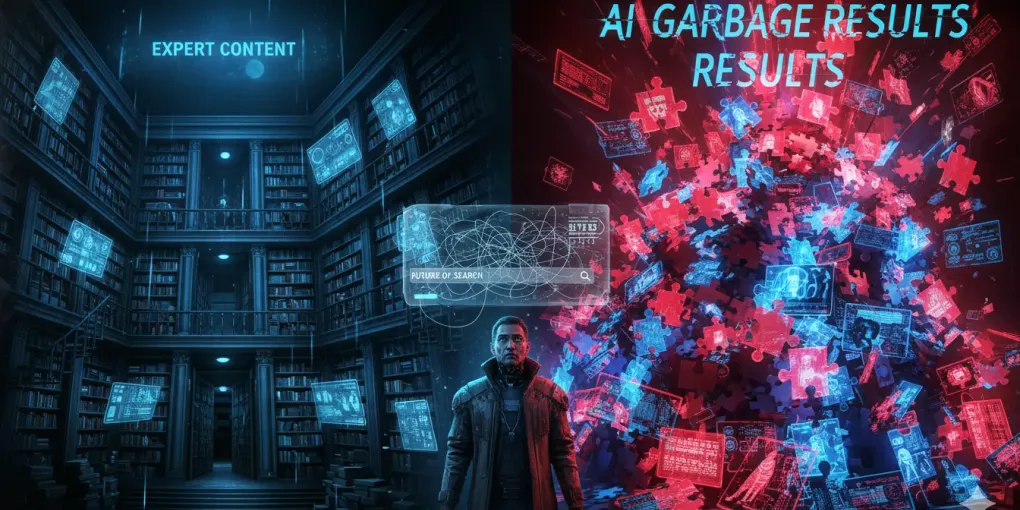
Lately, everyone running an independent site shares the same anxiety: traffic seems harder and harder to come by. Google’s AI Overview takes over most of the first screen, siphoning traffic from your hard-written articles. And what’s even more maddening — sometimes you’ll notice the sources cited in those top AI answers are some random “garbage sites.”
What’s going on here? Do we — indie site sellers who genuinely work on content — still have a chance?
Recently, two big names at Google Search, Danny Sullivan and John Mueller, talked about exactly this on their podcast, especially around “GEO (generative engine optimization)” and “content chunking.” Today Neo is going to break this down for you, based on this latest report from Search Engine Journal and where search stands in 2026.
1. Google’s Official Message: Stop Cutting Your Content Into “Tofu Cubes”
In the AI search era, a popular theory circulates: to make it easier for AI to crawl and understand your content, you should split your articles into tiny “knowledge chunks” — like spoon-feeding a baby.
Plenty of SEO experts swear by it: LLMs love this structure.
But Google’s Danny Sullivan poured cold water on it. He said: “We really don’t want you to do that.”
Neo’s take: What Google means is: don’t fragment your articles into disjointed pieces just to please machines, destroying the reading flow for humans. But that doesn’t mean “structure” doesn’t matter. Quite the opposite — a well-built page that uses H1, H2 headings, ordered lists, unordered lists, and other HTML tags is already doing high-quality “chunking”. What Google opposes is deliberate, mechanical “fragmentation.” It still likes — even depends on — logically clear, well-structured content. So keep doing your H-tag structure well; it’s still fundamentals.
2. The Heartbreaking Reality: Expert Content Gets Buried, Garbage Content Rules?
Even though Google talks about “writing for humans,” reality slaps hard.
The original author sharply points out that Google’s AI search results (AI Overviews) often show a “bad money drives out good” phenomenon.
Here’s a real example: the author searched a question about “styling a sweatshirt.” By all logic, Google should recommend GQ, The New York Times, or a well-known fashion blogger, right?
Instead, Google AI cited:
- A Medium personal blog that stopped updating in 2018 — with broken images.
- A LinkedIn article (who goes to LinkedIn for fashion advice?).
- A retail site selling sneakers that wrote a filler article.
And where did the truly authoritative, high-quality expert articles go? Buried under “More > News” below the search bar, where regular users never click.
Neo’s take: This is a deeply ironic situation. Google’s current AI algorithm still has huge bugs in judging “authority.” It seems to favor “shallow content” with simple structures that look like direct answers, while ignoring depth and professional background. For us niche indie site sellers, this is both bad news and an opportunity. Bad news: your carefully polished deep-dive articles might temporarily lose to those “frankenstein” posts. Good news: this chaos won’t last — Google will inevitably correct it (a reset).
3. The New Battleground of 2026: SEO vs. GEO
The article introduces a concept: Query Fan-out. Before, one keyword mapped to one set of search results. Now, a single user question gets broken down into multiple sub-questions by AI, each pulled from different sources and stitched together. That means the era of “one keyword feeds you forever” is completely over.
This brings us to the GEO (Generative Engine Optimization) we keep hearing about. Simply put: SEO is about getting Google to rank your links higher; GEO is about getting ChatGPT, Claude, and Google Gemini to cite your content as a source when generating answers.
Neo’s advice: How should indie site sellers respond?
- Don’t blindly chase “AI-exclusive writing styles”: As Danny said, algorithms change too fast. You rewrite your articles into “Q&A format” to please AI today, and tomorrow Google updates and your traffic hits zero.
- Stay true to E-E-A-T (experience, expertise, authority, trust): Even though Google AI sometimes recommends junk sites right now, that’s definitely a temporary technical flaw. Long term, brand and trust are still your moat.
- Accept the “zero-click” norm: 2025-2026 data shows more and more searches end right on the results page. Users read the AI answer and leave.
- Counter: Your content must offer not just information, but “emotional value” or “deep tools” that force users to click in for the full experience. Like downloads, video demos, or a unique point of view.
- Go multi-channel: Don’t bet your whole life on Google SEO. Social media (TikTok, Instagram) and email marketing (EDM) — these private-traffic channels are the assets you truly control.
Summary
Google plays down GEO’s impact publicly and preaches “content is king,” but as operators, we can’t just listen to the talk — we look at results. Right now, AI search results do have “chaos,” with garbage content running wild.
But that’s exactly why the competition for search experiences is just beginning. Instead of banging your head against Google’s algorithm maze, step back and ask yourself: if Google disappeared tomorrow, would my users still remember my brand?
That’s the real foundation of an independent site’s survival.
Reference: Search Engine Journal: Google Downplays GEO