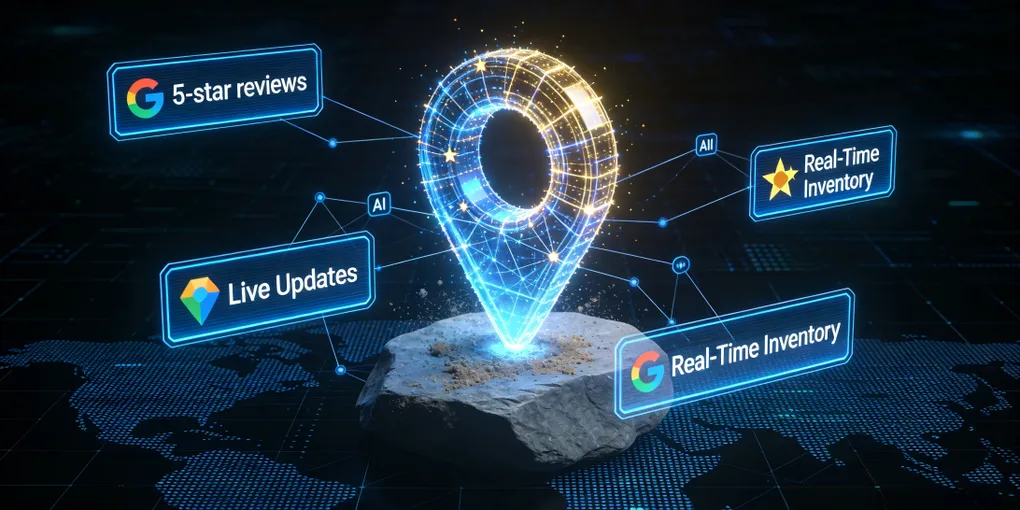
Don't Let Your Google Business Profile Become a 'Zombie' Listing — Dynamic Engagement Is the Key to 2026 Local Rankings
Hi everyone, this is Neo.
If you run an independent site — especially B2B, or B2C with a physical presence — you probably set up a Google Business Profile (GBP, formerly Google My Business) a long time ago. Fill in the address, pick a category, upload a logo, maybe get a few reviews in… and then you parked it and forgot about it.
That used to work. But today I’m here to sound the alarm: the game has changed!
According to the latest 2026 Local Search Ranking Factors report, if you haven’t touched your GBP in months, you’re quietly bleeding exposure and traffic. Meanwhile, your competitors are using dynamic engagement to poach your potential customers.
Today we’re going to break down why the old “set it and forget it” approach is dead, and how a dynamic strategy can win back Google local search traffic in 2026.
Why “set it and forget it” stopped working
Back in the Directory Era, Google just needed to confirm your physical location was real. As long as your Name, Address, and Phone number (NAP) matched across every platform, the algorithm figured you were legit.
These days, that’s only the entry fee. Your competitors have flawless NAP data too, so consistency alone no longer sets you apart.
The 2026 rule: Google wants to see a living, breathing business
The report shows that user behavior and engagement signals — clicks, posts, photos, calls, review frequency, and so on — are rapidly gaining weight. Google is actively rewarding businesses that look active.
Here’s the fun part: Business Hours is now the 5th most important ranking factor! Research shows that if your store shows “Closed” at the moment someone searches, your ranking drops noticeably.
Neo’s take: Don’t treat your business hours like decoration. Around holidays (Black Friday, Christmas, etc.), set special hours in advance. A static profile with perfect NAP and a 4.8-star rating but zero signs of life is like a candidate who shows up to an interview in a sharp suit and says nothing. Utterly unappealing.
The 4 “dynamic signals” that actually separate you from the pack
So how do you bring your GBP back to life? Focus on these four dimensions:
1. Review freshness matters more than review count
Reviews have always mattered, but now it’s not just about the star rating — it’s about review velocity. Twelve reviews in three months sends a much stronger signal to the algorithm than twelve reviews spread over three years. Fresh reviews can lock in the #1 spot.
What to do: Build review requests into your daily SOP. Send the invitation within 24 hours of a service or purchase, while the experience is still fresh in the customer’s mind. And reply to every review — good and bad — within 48 hours. Owner responses are a strong engagement signal in their own right.
2. GBP posts: the most underrated traffic hack
Too many business owners post once and never touch it again. That’s a massive missed opportunity. Posting regularly is a direct signal to Google that says “I’m still open and active.”
What to do: Aim for at least one post per week. Tie your posts to what’s actually happening in your business, and lean on the “Offer” and “Event” tags. Time-limited offers create urgency, and both post types get bigger display real estate than a plain “Update.”
3. Photo update frequency: authenticity beats polish
The data is clear: listings with recent photos and videos get noticeably more website clicks, driving-directions requests, and phone calls. “Recently updated” is the key phrase.
What to do: Set a reminder to upload new photos at least twice a month. B2B manufacturers: share factory floor tours, shipping processes, and team shots. B2C: show real products in real use. Skip the polished stock photos — Western customers care about authenticity. A “before/after” shot from the job site is often conversion gold.
4. Bookings, Q&A, and real-time inventory: close the loop inside Google
Google increasingly wants to keep searchers inside its own ecosystem to make their decision.
What to do:
- For B2B / service businesses: Turn on the “Book Online” button, and seed your Q&A section by asking and answering the 3–5 questions customers care about most — before some random stranger answers them wrong.
- For B2C retailers with physical products: Connect Merchant Center and sync your products with real-time inventory. Prioritize your top 50 highest-intent products. This is a free organic visibility pool that tons of Chinese sellers overlook!
Neo’s take: Running a GBP is like posting on social media — you have to keep showing up, or people (and the Google algorithm) won’t know you’re a reliable, active seller. Closing the loop inside Google massively shortens the customer’s decision path and lifts conversion rates.
The AI-era curveball: why this is urgent right now
If you think this is just about optimizing the classic Map Pack, you’re thinking too small.
Google’s AI features (like AI Overviews) are pulling directly from these dynamic GBP signals! AI-generated answers rely heavily on the freshness and consistency of entity information.
Businesses that keep their GBP current and consistent are exactly the ones AI recommends first in generated answers. If your profile is outdated, you don’t just drop in traditional search — you become completely invisible in AI-driven discovery. Fresh photos, recent reviews, accurate hours: these are the inputs AI needs to confidently recommend you.
Neo’s take: As AI search goes mainstream, the traffic entrances are shifting. Optimizing a dynamic GBP is really just feeding the AI the data signals it wants — and that’s our ticket into the future of AI search traffic.
Summary
Let’s wrap up the key takeaways:
- Static GBP is dead: the “set it and forget it” directory era is over. Dynamic engagement is now the core of Google local rankings.
- Master the four dynamic signals: review velocity, post frequency, photo freshness and authenticity, plus a seeded Q&A and real-time inventory.
- Embrace AI search: a dynamically-run GBP doesn’t just lift your traditional rankings — it’s also what keeps your business from being filtered out of AI search recommendations.
Static profiles quietly erode your authority over time, while dynamic ones build a compounding effect.
Whether you’re B2B or B2C, don’t let your GBP become a zombie listing. Go log into your dashboard right now and publish a new post with an offer.