Google Traffic Earthquake! AI Search Citations Crashed Too — Except Perplexity
Hi everyone, this is Neo.
For everyone running an independent site — has it felt like a rough patch lately?
In mid-January 2026, Google quietly rolled out a major unconfirmed algorithm update. Traffic on plenty of big-name sites got cut in half — especially the sections relying on blogs and informational content. It’s been a disaster zone.
We’ve been saying SEO is shifting toward AEO (Answer Engine Optimization), and everyone’s watching AI search traffic. So here’s the question: if your Google organic rankings tank, does your visibility in AI search (ChatGPT, Gemini, Perplexity) tank with them?
Recently, SEO heavyweight Lily Ray ran a hardcore data analysis that exposed the brutal truth.
Today I’m walking you through her report — and what it means for keeping food on the table in the AI era.
01. The Brutal Double Whammy: Google Drops, and So Does AI
Lily Ray picked 11 site subfolders that crashed in the January update and compared their Google organic traffic against their AI citation counts.
The findings sting: “when one falls, they all fall.”
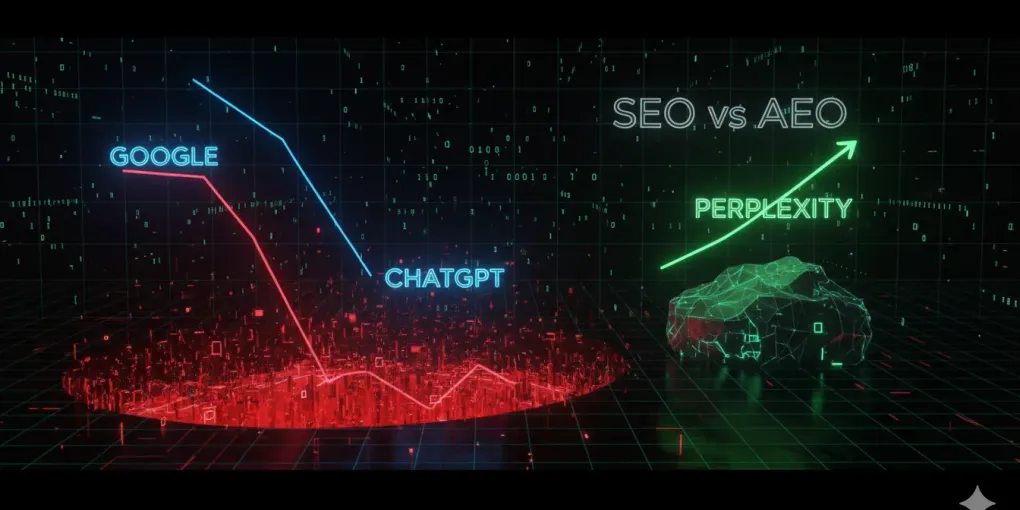
Across those 11 samples, Google organic traffic fell an average of 26.7% — while their total citations across all AI search engines fell 22.5% on average.
What does that mean? Traditional SEO is still the foundation of AI SEO. Fall out of favor in classic Google search, and you lose credibility in AI’s eyes too.
Who Got Hit Hardest?
The data shows Google’s own AI products got hammered the hardest:
- Google AI Mode: citations down 23.8%. Makes sense — Google’s AI runs on its own index, so when organic rankings fall, its AI recommendations follow.
- ChatGPT: citations down 27.8% — even worse than Google itself!
That confirms what many have suspected for a while: ChatGPT leans heavily on Google’s search results. OpenAI never said it out loud, but data doesn’t lie. If your site can’t be found on Google, ChatGPT probably can’t see you either.
Neo’s take:
A lot of B2B friends ask me: “Neo, can I stop worrying about Google rankings and just focus on AI optimization?”
Look at this data and wake up. Google organic search is still the wellspring of traffic. ChatGPT may be trendy, but at its core it’s still “hauling” Google’s search results. When the skin is gone, where does the hair stick? Mastering traditional SEO is still the ticket to AI traffic.
02. The Lone Survivor: Perplexity
Amid the carnage, one AI search engine showed remarkable resilience: Perplexity.
While other AI engines dove with Google, Perplexity’s citations dipped just 2.9%. Of the 11 sites tested, only 4 saw citation declines on Perplexity — the rest held firm.
Why is Perplexity so tough?
Because its ingredients come from somewhere else. Perplexity doesn’t treat Google as gospel the way ChatGPT does. It’s believed to rely mainly on the Brave Search API plus its own crawler, PerplexityBot, to build its index.
That’s genuinely interesting. Perplexity is building a system of judgment that’s independent of Google.
Neo’s take:
This is a huge opportunity for us!
Everyone knows Google’s algorithm is getting more and more “mystical” — it has a fit at the drop of a hat. If your site gets caught in the crossfire, Perplexity might be your only lifeline.
Since Perplexity doesn’t march to Google’s drum, what does it care about? From my experience, it weighs:
- Authoritative citations: Is your brand mentioned by other authoritative outlets?
- Structured data: Can machines read your content?
- Direct answers: Does your article answer the user’s question head-on?
Don’t put all your eggs in one basket. Optimizing for Perplexity is like buying your independent site a “Google accident insurance” policy.
03. What Should We Do in 2026?
After reading this report, I’ve distilled three practical moves to help you hold your traffic in 2026.
1. Hold the Google Baseline
Don’t buy the “SEO is dead” talk. As long as ChatGPT uses Google’s data, Google SEO stays the core. Keep building your E-E-A-T (experience, expertise, authoritativeness, trust) and make sure your technical SEO has no fatal flaws.
2. Build Your “Non-Google” Ecosystem
Since Perplexity has shown its independence, we need to take it seriously.
- Multi-channel visibility: get your presence onto Reddit, Quora, LinkedIn. Perplexity loves citing high-quality discussions from these UGC platforms.
- Brand building: brand mentions matter more than raw backlinks in the AI era.
3. Double Down on Golden Knowledge
I’ve mentioned this before: AI loves citing content that combines consensus with unique insight. Don’t just pump out commodity content — offer unique data and expert insight. Only when your content is “irreplaceable” will AI be forced to cite you even when your rankings slip.
Summary
The double whammy from this Google update is a wake-up call: AI search isn’t a completely separate new world — it’s still deeply rooted in the soil of traditional search.
- The bad news: when Google rankings fall, ChatGPT traffic probably falls too.
- The good news: Perplexity offers a second curve that doesn’t fully depend on Google.
As operators, here’s the play: hold Google rankings with one hand to protect your ChatGPT baseline; build multi-channel brand presence with the other to find growth through Perplexity.
I’m Neo. If this article gave you something to think about, share it with your friends in the independent-site game. See you next time!