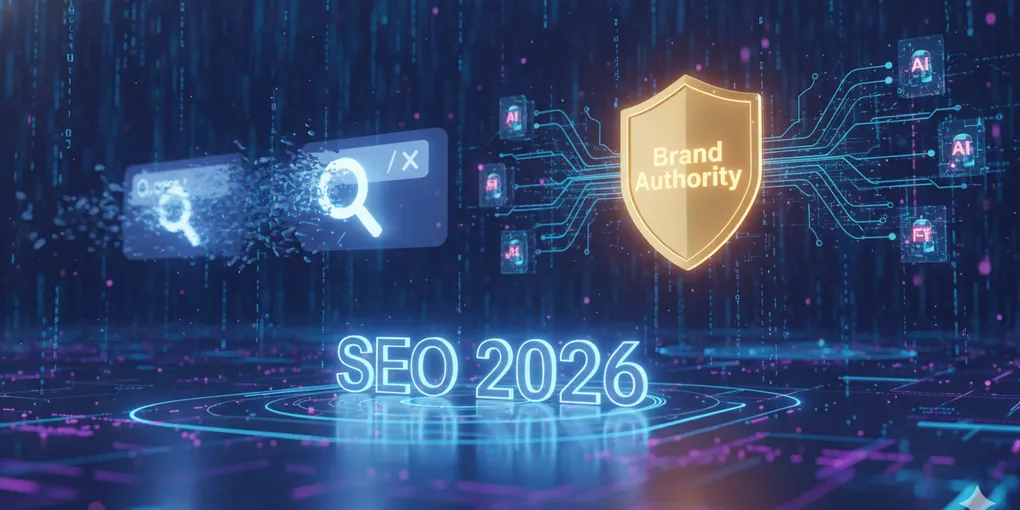
The New SEO Landscape for Independent Sites in 2026: It's Not Just About Google Anymore — You Need to Win Over AI (With a Practical Playbook)
Hi everyone, this is Neo.
I was recently having tea with a few independent site owners, and we all landed on the same anxiety: “AI search (ChatGPT, Perplexity, and Google’s AI Overviews) is getting smarter by the day. Users see the answer right in the search results and never click through to the site. Can we SEO folks even survive anymore?”
That’s a very real and painful question.
But crisis usually hides opportunity.
Today, I’m going to break down a complete “new-era off-page SEO playbook” — drawing on the latest sharing from GrowResolve founder Michael Johnson, combined with my own hands-on observations in 2026 (simulated perspective).
This playbook won’t just help you hold your traditional Google rankings — it’ll make your brand the “standard answer” in AI’s eyes and grab those precious AI recommendation slots.
The Core Logic: From “Keywords” to “Entity Authority”
In the past, we did SEO by staring at keywords. Stuff the page with the right words, buy enough backlinks, and the rankings would climb.
But in 2026, whether it’s Google’s algorithm or AI models, what they really value is “entity” and “authority.”
Put simply: AI doesn’t care what you say — it cares “who you are” and “how others talk about you.”
If authoritative sites across the web are discussing your brand and citing your data, AI concludes you’re a “trusted entity.” When users ask questions, AI will prioritize citing your content as the answer.
That’s the core of today’s topic: off-page SEO isn’t just about building backlinks — it’s about building brand assets across the entire web.
The Four Decisive Signals of Off-Page SEO in 2026
Michael Johnson mentioned several key signals in his workshop. Combined with the reality of Chinese sellers, here are the four points I’ve summarized:
1. Brand Mentions > Junk Backlinks
We used to spam profile links and forum signature links. Now those are basically useless — even harmful.
In 2026, AI values contextual brand mentions far more. Even if the mention carries no hyperlink (an unlinked mention), as long as your brand name shows up in an authoritative industry article alongside a positive assessment, that’s an extremely strong signal.
- Neo’s take: Stop buying those $5-per-hundred junk backlinks. Try reaching out to industry blogs instead — even a one-line mention as a case study is worth a hundred times more than junk links.
2. Digital PR and Data-Driven Storytelling
How do you get big media to cover you willingly? Become the source of the data. AI models are starving for “first-hand data.” If you publish a report like “2026 Outdoor Camping Gear Consumer Trends” packed with your own proprietary research, industry media, bloggers, and even competitors will end up citing your numbers.
- Neo’s take: This works especially well for B2B sellers. Take your customer data (anonymized), turn it into an industry whitepaper — it’s the fastest path to high-quality authoritative endorsements.
3. Topical Authority
Are you an expert in your field? If your site sells “coffee machines” but your off-page content is all “how to lose weight,” AI will think you have a split personality. Your off-site content must be tightly focused on your core niche, building a 360-degree “coffee machine expert” persona.
4. Sentiment and Trust Signals
This one’s easy to overlook. AI can read sentiment. If the web is full of negative talk about you (low Trustpilot scores, Reddit threads full of complaints), then no matter how high you rank, AI won’t recommend you. Reputation management has officially become part of SEO.
The Practical Playbook: How Chinese Sellers Can Execute
Talk is cheap. Here’s a “three-step” action plan I’ve put together for Chinese independent site sellers:
Step One: Clean Up and Take Stock
- Audit existing backlinks: Run Ahrefs or Semrush and Disavow all those gambling, adult, and low-quality junk links.
- Monitor brand reputation: Set up Google Alerts or use a dedicated sentiment monitoring tool. The moment someone complains about you on Reddit or Quora, respond and resolve it immediately.
Step Two: Become the “Cited” Entity
- Create “Linkable Assets”:
- For B2C sellers: Make high-quality infographics, like “5 steps to properly wash a cashmere sweater,” and offer them free to fashion bloggers — as long as they keep your brand attribution.
- For B2B sellers: Publish industry whitepapers or calculator tools (like an “injection molding cost calculator”).
- HARO & Qwoted: Watch what journalists are sourcing on these platforms and pitch proactively. If you get picked up, that’s a top-tier media endorsement.
Step Three: Distribute Across All Channels
AI’s training corpus isn’t just Google. TikTok, YouTube, LinkedIn, and Pinterest are all places AI learns.
- Strategy: Take one deep blog post, rewrite it as a long-form LinkedIn article, turn it into a YouTube explainer video, and break it into Pinterest infographics. Make AI able to “read” your brand everywhere.
Neo’s Summary
Guys, SEO really has changed in 2026.
In the past we were pleasing search engine crawlers; now we’re winning AI’s “respect” by building brand authority.
Technology keeps changing, but the essence of business doesn’t: trust is the biggest currency.
Stop believing in black-hat tricks and shortcuts. Steadily put out valuable content, nurture every piece of customer feedback, and actively connect with authoritative voices in your industry. Once you become the industry’s “source of truth,” both Google and ChatGPT will have no choice but to push you in front of users.
I hope this article gives you some direction if you’ve been feeling lost.