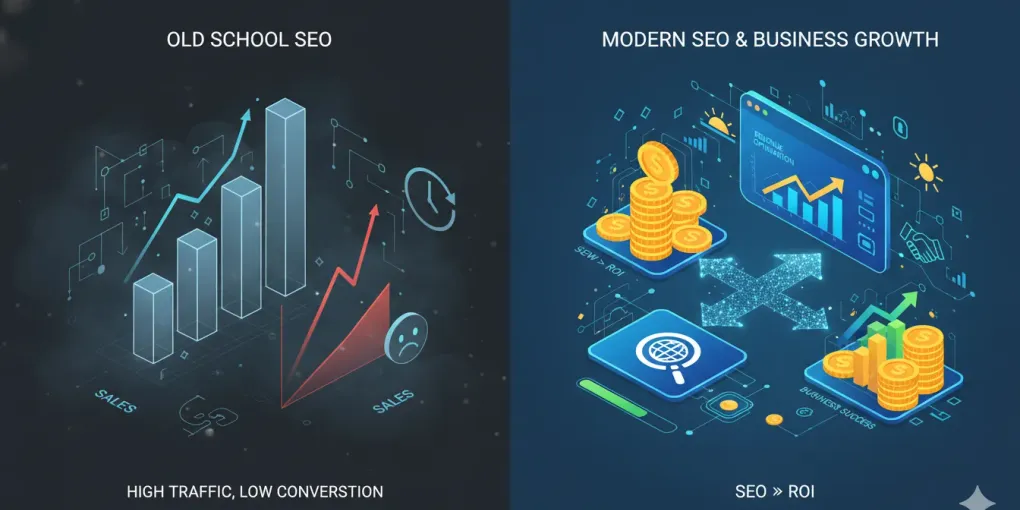
SEO Traffic Is Up but Orders Aren't? Your KPIs Are Probably Wrong
Hi everyone, this is Neo.
Chatting with a few friends running DTC sites recently, we all share the same frustration: the SEO reports look great — rankings up, traffic up — but the boss still says it’s “not working,” and the sales team complains about lead quality.
This isn’t a capability problem on your end. It’s a problem with how we measure SEO success. We’re carrying too much “Metric Debt.”
Today I want to dig into why traditional SEO KPIs are “lying” to your business, and how we should fix them.
1. The Hidden Cost of Vanity Metrics
In the past, SEO meant staring at Rankings, Clicks, and Visibility. Those metrics aren’t wrong — they’re just no longer enough.
Why? Because the environment changed.
AI Search and zero-click results are siphoning off the clicks that used to be yours. Users can get the answer right on the search results page — they never need to click through to your site.
If your team is still chasing “more traffic” and “more keywords,” you might be sliding into a “false prosperity” trap.
Neo’s take: Especially for B2B DTC sites, traffic that isn’t qualified is worthless to the business. We need to shift from a “traffic mindset” to a “value mindset.” If pure traffic growth can’t convert into business growth, that SEO is just burning resources.
2. Redefining SEO KPIs: From Traffic to Business
If all your KPIs sit at the top of the funnel, you’re not doing growth — you’re doing “visibility tracking.”
Let’s split metrics into three tiers and see which tier your reports live in:
1. Operational Signals
This is the foundation — it tells us whether SEO is running properly.
- Crawlability & Indexation: can Google crawl and index your pages?
- Core Web Vitals: is your site fast?
- Content Velocity: how often are you updating content in priority areas.
Most teams’ reports are mostly made of these. Necessary, but nowhere near enough.
2. Engagement Signals
These tell us whether users actually care about your content.
- Engaged Sessions: do users stay longer than 10 seconds?
- Scroll Depth: how far down the page do they scroll?
- Micro-conversions: did users download the whitepaper? Did they view the pricing page?
These get far closer to the truth than raw “clicks.”
3. Business Outcomes
This is what the boss cares about most, and what SEO finds hardest to prove — but it must be proven.
- Pipeline Influence: how many sales opportunities did organic search bring in?
- CAC (Customer Acquisition Cost): how does SEO’s acquisition cost compare to paid ads?
- Revenue per Visitor: how much revenue does each organic visitor generate?
If your reports don’t show any of this, the value of SEO will always be questioned.
Neo’s take: Even if you can’t calculate precise ROI right away, start tracking money-adjacent metrics like Demo Requests or Add to Cart instead of just UV/PV. If you’re B2B, try computing “demo requests per organic search session.”
3. How to Transition Smoothly?
Changing KPIs is really a psychological battle. People are used to watching rankings — it feels safe. Talking about revenue attribution always feels complicated and uncertain.
My advice: don’t do “shock therapy.” Take it step by step:
- Audit your current state: look at your existing reports — how much is vanity metrics, how much is business metrics?
- Build the mapping: map your pages to the sales funnel. Which pages attract traffic, and which convert?
- Add new metrics: you don’t need perfection on day one. For example, B2B can add “inquiries from organic traffic”; ecommerce can add “average order value of organic traffic.”
Try telling your boss: “Over the next two months, let’s run a test — see if optimizing these core pages brings more inquiries, not just more clicks.”
Push it forward with an experimenter’s mindset: define what success looks like, then share the results — even if they’re not perfect.
Summary
SEO isn’t dying — it’s maturing.
The future winners of SEO aren’t the ones with the prettiest rankings, but the ones who can calmly explain “how organic search brings real money into the business.”
Don’t let outdated KPIs drag down your business decisions.
Reference: Why Your SEO KPIs Are Failing Your Business